
Serengeti Best Time to Visit 2026: The Complete Season-by-Season Guide
Table of Contents — Serengeti Best Time to Visit
- Why Seasonality Matters More Than Any Other Decision
- The Two Serengeti Seasons Explained
- Month-by-Month: What to See, Weather & Visitor Numbers
- Dry Season (June–October): Peak Safari Experience
- Green Season (November–May): Hidden Gems & Real Value
- Best Time to Visit the Serengeti by Interest
- Serengeti Weather: What to Expect Each Month
- Visitor Numbers & Why They Matter to Your Experience
- Frequently Asked Questions
This is the most comprehensive guide to the Serengeti best time to visit you will find anywhere — covering every month, every season, and every reason to choose one over another — written not from a desk in London or New York, but by a team that has spent their lives on these plains. At Mujuni African Adventures, we are Tanzanians. We know this ecosystem in every season, in every light, in every mood. And we want you to experience the version of it that will stay with you for the rest of your life.

Why Seasonality Matters More Than Any Other Decision
Most travellers spend weeks choosing between lodges — debating pool views, menu options, thread counts. Far fewer spend serious time thinking about when to arrive. This is the wrong priority. The single variable that will most define your Serengeti best time to visit experience is not your accommodation. It is your timing.
Here is why. The Serengeti is a living, breathing, constantly shifting ecosystem driven entirely by rainfall. The rains dictate where the grass grows. The grass dictates where the wildebeest go. The wildebeest dictate where the predators concentrate. And the predators dictate what you will see on your game drives. Change the month and you change everything — the landscape colour, the animal density, the predator action, the birdlife, the crowd levels, and the price you pay.
A traveller who visits in July and one who visits in March are, in many ways, visiting two entirely different places — even if they stay in the same camp. Understanding the Serengeti seasons is not a travel technicality. It is the foundation of your entire experience.
“Timing your Serengeti safari correctly is worth more than any upgrade. The right week in the right place will change your life. The wrong month, even in the finest lodge, will leave you wondering what the fuss was about.”
— Nikson Mujuni, Founder, Mujuni African Adventures
The Two Serengeti Seasons Explained
Tanzania has two primary seasons — the dry season and the green season (sometimes called the wet season). Within these, there are two short transitional periods. Understanding these is the backbone of planning the Serengeti best time to visit for your trip.
Dry Season — June to October
Peak Season
Little to no rainfall. Vegetation thins out, making wildlife easier to spot. Animals concentrate around permanent water sources. The great migration river crossings happen here. Warm days, cool nights.
Best for: Migration crossings, Big Five sightings, predator action, first-time safari visitors.
Short Dry — January to February
Calving Season
A brief dry window between the two rainy seasons. The short-grass plains of the southern Serengeti burst with newborn wildebeest. Predator density is extraordinary. Fewer visitors than peak season.
Best for: Calving season, predator sightings, photography, value.
Long Rains — March to May
Green Season
The heaviest rains of the year. Landscape transforms into lush, dramatic green. Some camps close. Dramatically lower visitor numbers. Birding is exceptional. Roads can be challenging.
Best for: Birdwatching, photography, budget travel, solitude.
Short Rains — November to December
Shoulder Season
Lighter, shorter rains that rarely disrupt a full day. The herds return south. Landscapes are fresh and green. Comfortable temperatures. Good value rates. Excellent for photographers.
Best for: Value travel, lush scenery, fewer crowds, return migration movement.
Month-by-Month: What to See, Weather & Visitor Numbers
The table below is your complete Serengeti best time to visit reference — covering weather, wildlife and crowd levels — the single resource our guides wish every traveller read before booking. Visitor numbers are shown as a relative crowd index, where 10 is the busiest possible.
| Month | Weather | What to See | Visitors |
|---|---|---|---|
| January | Hot & dry, 28–32°C | Calving season begins in Ndutu — up to 8,000 births per day. Cheetah & lion activity is intense. | 4/10 |
| February | Hot & dry, 28–33°C | Peak calving. The highest concentration of predators in Africa. Exceptional photography. Fewer crowds than July. | 5/10 |
| March | Warm, rains begin, 24–28°C | Herds begin moving north. Long rains start. Green, lush plains. Fewer visitors. Good predator sightings continue. | 2/10 |
| April | Heaviest rains, 22–26°C | Dramatic green landscapes. Birding peaks. Solitude guaranteed. Some tracks impassable. Many camps closed. | 1/10 |
| May | Rains easing, 23–27°C | Herds in western corridor. Grumeti crossings begin. Lush landscapes, excellent photography light. Very few visitors. | 2/10 |
| June | Dry & cool, 22–26°C | Grumeti River crossings. Herds moving north. Clear skies. Crowds building. Excellent game viewing conditions. | 5/10 |
| July | Dry & cool, 20–25°C | Mara River crossings begin. Peak migration drama. Busiest month. Every crossing point has vehicles. | 9/10 |
| August | Dry & warm, 22–27°C | Mara River crossings peak. Highest visitor numbers. Book 12–18 months ahead. Extraordinary wildlife density. | 10/10 |
| September | Dry & clear, 23–28°C | Crossings continue. Crowds thin slightly. Excellent photography. Herds begin return south. Our top recommendation. | 7/10 |
| October | Dry, warming, 25–30°C | Herds moving south through eastern Serengeti. Good predator sightings. Short rains approaching. Lower crowds. | 5/10 |
| November | Short rains, 24–28°C | Herds returning south. Fresh green grass. Excellent bird migration. Comfortable temperatures. Great value. | 3/10 |
| December | Rains easing, 26–30°C | Herds arriving on southern plains. Calving season approaching. Festive season brings brief crowd spike. | 5/10 |
Not Sure Which Season Is Right for You?
Our Tanzanian guides have lived every season in the Serengeti. Tell us your dream safari and we will match you to the perfect time of year — at no cost, with no obligation.
Book Your Free Safari Consultation
No obligation. Just honest advice from people who know Tanzania best.
Dry Season (June–October): The Peak Serengeti Safari Experience
The dry season is when the Serengeti best time to visit debate is most often won — and it earns its global reputation fully. Skies are cobalt blue. The grass turns gold. Animals are lean, active, and visible — there is no thick vegetation to hide behind. Predators become bolder and more concentrated. And the great wildebeest migration reaches its most dramatic chapter: the Mara River crossings.
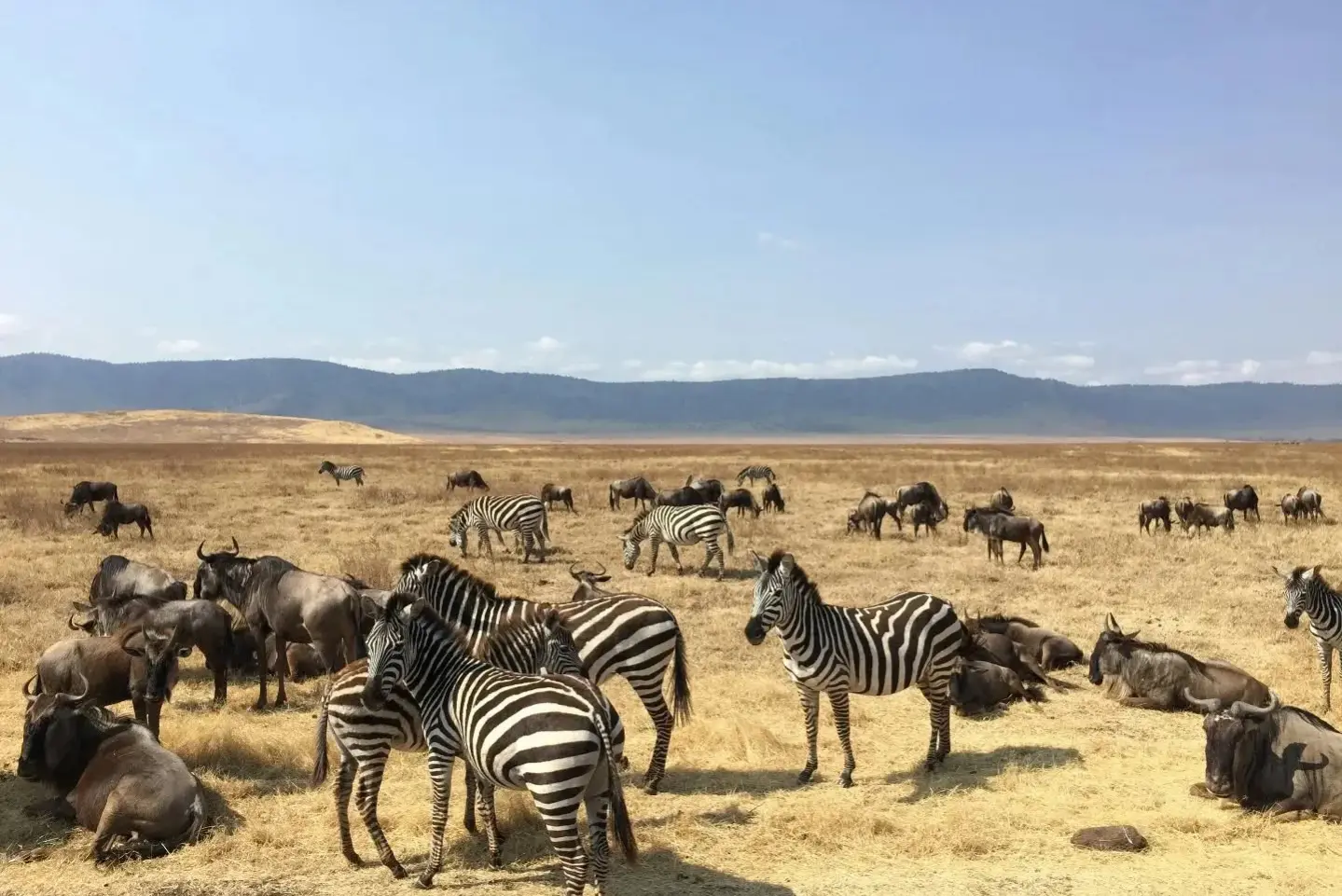
Between July and October, the wildebeest mass on the banks of the Mara River in the northern Serengeti. The tension is electric. Sometimes the herds wait for hours — or days — before a trigger animal leaps and thousands follow in a churning stampede of hooves and spray, with crocodiles surging from below. This is what most travellers are picturing when they dream of the best time for a Serengeti safari. And this is it.
Why September Is Our Guides’ Favourite Month
If you ask the Mujuni guides which single month represents the true Serengeti best time to visit, the answer is almost always September. The crossings are still happening. The skies are dry and crystalline. The light for photography is extraordinary. And crucially — the August peak crowds have thinned, meaning fewer vehicles at crossing points and a more intimate wildlife experience.

Dry Season — What Our Guides Want You to Know
- Book 12–18 months ahead for July and August. The best camps and crossing-point vehicles sell out entirely.
- September is the sweet spot — crossings still active, crowds drop by 30%, photography light is at its finest.
- Nights get cold — bring a fleece or light jacket for early morning game drives. Temperatures can drop to 12°C before dawn.
- Balloon safaris reach their peak spectacle in dry season — book separately and as early as possible.
- Water sources concentrate wildlife — ask your guide to focus on rivers and waterholes during midday hours.
Green Season (November–May): The Serengeti’s Best-Kept Secret
Here is the truth that most travel agents will not tell you: for certain travellers, the green season is genuinely the Serengeti best time to visit — not a compromise. For certain types of travellers — photographers, birdwatchers, budget-conscious families, and anyone who hates crowds — it is genuinely the best time to visit the Serengeti.
The landscape transforms completely. The golden plains turn electric green. The sky becomes a canvas of dramatic storm clouds that produce the most extraordinary safari photography light you will ever see. Rivers run full. Migratory birds arrive from Europe and Central Asia — over 500 species have been recorded in the Serengeti ecosystem, and green season is when many of them appear.
Visitor numbers drop by 60–80% compared to peak season — making green season one of the most compelling answers to the question of Serengeti best time to visit. Many travellers report seeing a leopard with a kill, a cheetah hunt, and a lion pride — all in a single morning, with no other vehicles in sight. This is the Serengeti as it was always meant to be experienced.
Calving Season: January to February
The short dry window within the green season — January to February — deserves its own conversation. This is when the wildebeest calve on the short-grass plains of Ndutu in the southern Serengeti. Up to 8,000 calves are born each day. Predators — cheetah, lion, leopard, hyena, wild dog — converge on the area in numbers unmatched anywhere else on the continent. For wildlife photographers and families, calving season rivals or surpasses the river crossings as the most compelling event in the Serengeti annual calendar.

Best Time to Visit the Serengeti by Interest
The honest answer to “when is the Serengeti best time to visit?” is simple: it depends entirely on what moves you. Here is how to choose:
For River Crossings
July to October, northern Serengeti. Mara River. Book 12–18 months ahead for July–August. September for fewer crowds with equal drama.
For Calving Season
Late January to February, southern Serengeti (Ndutu). Extraordinary predator action. Fewer visitors than dry season. Great for families.
For Photography
September for dry-season clarity and golden light. Or March–May for dramatic green skies and moody, atmospheric shots no one else has.
For Birdwatching
November to April when Eurasian migrants are present. Over 500 species recorded. Green season birding in the Serengeti is world-class.
For Families with Children
June to September for ease of travel, reliable weather, and the best Big Five sightings. February (calving) is also brilliant for kids.
For Value & Solitude
November, May, or March. Rates drop 20–40%. Crowds disappear. The wildlife is still outstanding. The landscape is at its most beautiful.
Serengeti Weather: What to Expect Each Month
When planning the Serengeti best time to visit, weather and wildlife are inseparable — the weather is what drives the wildlife calendar. Understanding what to pack and what conditions to expect will make your trip significantly more comfortable.
The Serengeti sits at an elevation of roughly 920–1,850 metres above sea level, which moderates temperatures significantly. Unlike the coast, it never becomes oppressively hot. Days in the dry season reach 25–32°C with very low humidity. Nights and early mornings can drop to 10–15°C, making a warm layer essential for dawn game drives.
During the long rains (April–May), afternoon downpours are common but rarely last all day. Mornings are often clear. Rain tends to be dramatic and brief rather than persistent drizzle. The real challenge is not the rain itself but the state of some tracks — a 4×4 vehicle is essential, and certain remote areas become inaccessible. The Tanzania National Parks authority (TANAPA) publishes seasonal access updates for all major routes.
The short rains (November–December) are lighter and less disruptive. Many days see no rain at all. Temperatures are warm and comfortable. This is one of the most underrated windows in the entire Serengeti seasons guide — the landscape is green, fresh, and uncrowded, and the wildlife is superb.
Visitor Numbers & Why They Matter to Your Experience
Crowd levels are one of the most overlooked factors when choosing the Serengeti best time to visit. The difference between August — the busiest month — and April — the quietest — is not just a matter of preference. It fundamentally changes the experience on the ground.
At the height of peak season, the Mara River crossing points can have 30–50 vehicles parked along the bank simultaneously. The animals are still extraordinary. The crossings still happen. But the experience of watching one of nature’s greatest dramas unfold from the middle of a traffic jam is a very different thing from watching it alone, or with just two or three other vehicles.
Our recommendation: whatever Serengeti best time to visit you choose — peak or green season — work with a ground operator, work with a ground operator — like Mujuni African Adventures — who knows which crossing points are less visited and can position you away from the main crowds. If flexibility allows, September gives you 90% of the same experience with 40% fewer vehicles. And if you are open to green season, you may find the most profoundly private wildlife experience of your life.
According to Tanzania Tourism statistics, Serengeti visitation has grown significantly year on year — making the right timing and a knowledgeable local guide more important than ever before.
Why the Serengeti Best Time to Visit Matters — Summary
- Wildlife location changes completely by month — the herds cover 1,800km per year
- Predator concentration peaks in calving season (Feb) and dry season (Jul–Sep)
- Crowd levels vary by 80% between peak and low season — directly affecting your experience
- Prices fluctuate 20–50% between peak and green season — timing saves money
- Camp availability — the best camps at peak crossing points sell out a year in advance
- Photography conditions are completely different in green vs dry season
- Weather comfort — dry season offers the most reliable conditions for first-time visitors
Frequently Asked Questions
What is the absolute best month for the Serengeti best time to visit?
There is no single Serengeti best time to visit that suits everyone — it depends entirely on your priorities. For river crossings, July to September. For calving and predators, February. For value and solitude, November or May. Our guides consistently recommend September as the optimal balance of drama, photography conditions, and manageable crowd levels.
Is the Serengeti worth visiting in the rainy season?
Absolutely. For photographers and birdwatchers, the green season may well be the Serengeti best time to visit — it is dramatically underrated. Wildlife is still abundant, predators are active, and the landscape is breathtaking. For photographers, birdwatchers, and anyone who values solitude, the green season can deliver a more meaningful experience than peak season — at significantly lower cost.
How far in advance should I book a Serengeti safari?
For July and August, book 12–18 months in advance. The best mobile camps and lodges near the Mara River sell out completely. For other months, 6–9 months is typically sufficient, though earlier is always better for the finest properties.
What should I pack for the Serengeti in different seasons?
Dry season: light clothes for the day, warm fleece or jacket for early mornings and evenings. Green season: add a light waterproof layer and expect some afternoon rain. Year-round: neutral colours (khaki, olive, grey), high-SPF sunscreen, good quality binoculars, and dust-proof camera protection in dry season.
Can I see the Big Five in every season?
Yes. The Serengeti holds resident populations of all Big Five — lion, leopard, elephant, buffalo, and black rhino — year-round. Dry season concentrates animals near water, making sightings more predictable. Green season offers excellent lion and leopard sightings in lush terrain. Rhino are rare but present in the northern Serengeti near the Mara River.
Let Us Match You to Your Perfect Serengeti Season
Every traveller is different. The best time to visit the Serengeti for you depends on what moves you — the thunder of a river crossing, the tenderness of a newborn calf, the silence of a green-season dawn with no other vehicles in sight. Tell us what you are dreaming of, and we will pinpoint your perfect Serengeti best time to visit.
Book My Free Consultation
No pushy sales. No hidden fees. Just expert advice from Tanzania’s local guides.
🌎
Book Your Free Safari Consultation
Tell us about your dream safari — one of our Tanzanian guides will be in touch within 24 hours.
Choose a preferred date & time slot
East Africa Time (EAT) is UTC+3. We will confirm your slot and send the meeting link to your email within a few hours.
Or reach us directly on WhatsApp: +255 672 450 072
✓
Enquiry Received — Thank You!
One of our local Tanzanian guides will review your details and get back to you within 24 hours.
Online Meeting Requested
We will confirm your slot and send the video call link directly to your email.
Need a faster response? Message us now on
+255 672 450 072