
Wildlife · Serengeti · Migration
Serengeti Migration 2026: Ultimate Guide to the Greatest Show on Earth
By Nikson Mujuni · March 2026 · 12 min read
📖 Table of Contents
- What Is the Serengeti Migration?
- Month-by-Month Migration Calendar
- The Dramatic Serengeti River Crossings
- Best Time to Witness the Great Wildebeest Migration
- Where to Stay Along the Migration Route
- 7 Expert Tips for Your Serengeti Migration Safari
- Frequently Asked Questions
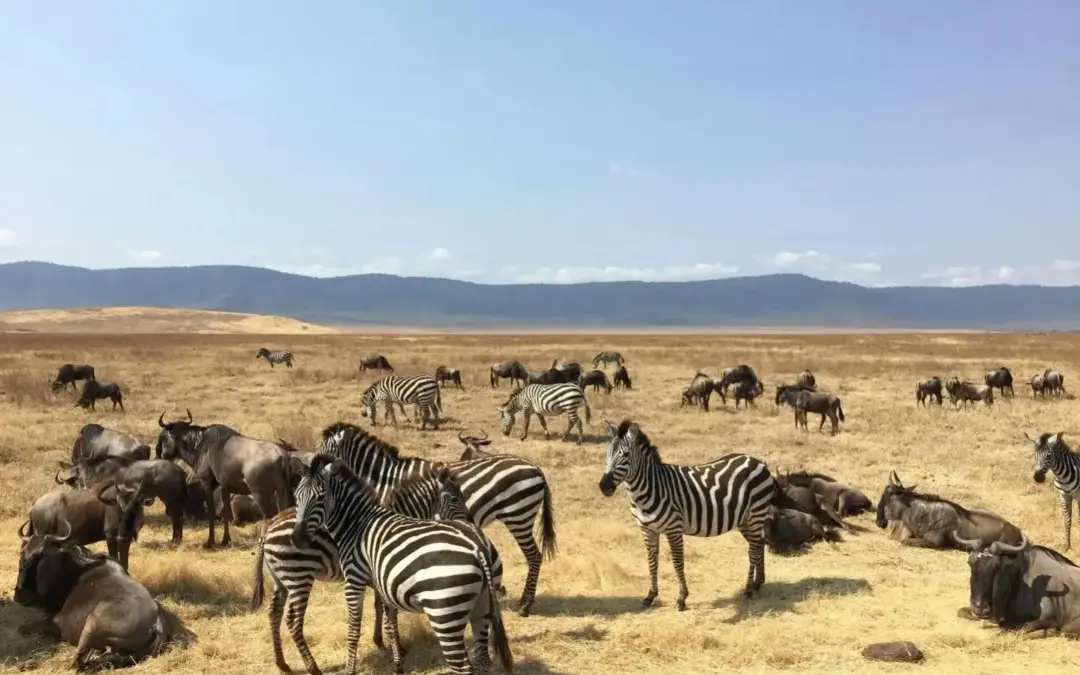
The ground trembles before you see them. A low rumble rises from the horizon, growing louder with every heartbeat, until the dust cloud appears — and then they come. One and a half million wildebeest, hundreds of thousands of zebra and gazelle, pouring across the golden plains of Tanzania in an endless, thundering river of life. This is the Serengeti migration — and nothing you have ever watched on television will prepare you for the reality of standing here.
Every year, one of nature’s most extraordinary events unfolds across the Serengeti ecosystem. The great wildebeest migration is not a single moment — it is a year-round, 1,800-kilometre circular journey driven entirely by one force: rain, and the green grass that follows it. Understanding how it works is the key to planning a safari that puts you in exactly the right place at exactly the right time.
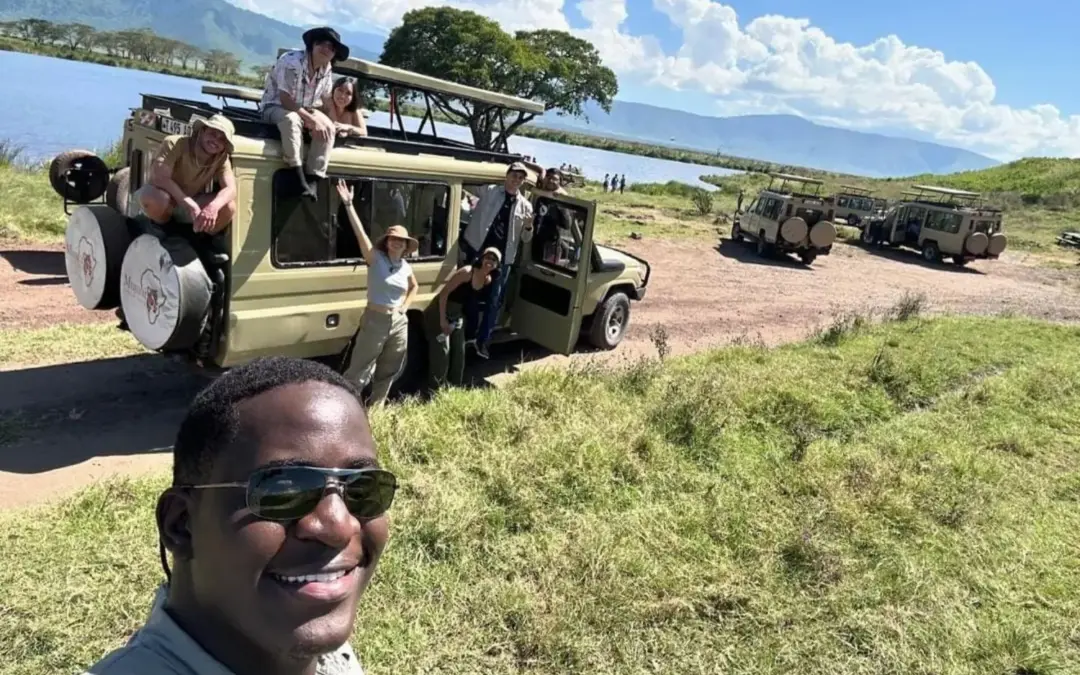
At Mujuni African Adventures, our guides were born and raised in the shadow of these plains. They have followed these herds their entire lives. In this guide, we share everything they know.

What Is the Serengeti Migration?
The Serengeti migration — scientifically known as the great wildebeest migration — is the largest overland animal movement on the planet. Over 1.5 million wildebeest, joined by approximately 200,000 zebra and 300,000 Thomson’s gazelle, make a continuous clockwise loop around the greater Serengeti-Mara ecosystem, crossing between Tanzania’s Serengeti National Park and Kenya’s Masai Mara Reserve.
What drives this extraordinary journey? It is not instinct in the conventional sense. The herds follow the rains — specifically the sweet, protein-rich short grass that sprouts in the wake of rainfall. As the seasons shift, the grass quality changes, and the animals move. They have no leader. There is no route. It is a collective intelligence played out across the landscape, and it has been happening for tens of thousands of years.
The great wildebeest migration is a UNESCO-recognised natural phenomenon and one of the last great wildlife spectacles accessible to the modern traveller. Unlike the ice caps or the coral reefs, this spectacle is increasing — the wildebeest population has actually grown over the past half century thanks to conservation efforts in Tanzania.
“The Serengeti migration is not a wildlife event you watch. It is something that happens around you, beneath you, and through you — until you realise you are part of it.”
— Nikson Mujuni, Founder, Mujuni African Adventures
Month-by-Month Serengeti Migration Calendar
The Serengeti migration is often marketed as a single seasonal event, but the truth is far more spectacular: it never stops. Here is what to expect each month of the year:
🗓️ Serengeti Migration — Month-by-Month Guide 2026
Jan – Feb
Calving Season — Southern Serengeti Top Pick
Up to 8,000 wildebeest are born every single day on the short-grass plains of Ndutu. Predator action is intense. An unforgettable experience for families and photographers.
Mar – Apr
Green Season Movement — Central Serengeti
The herds begin moving north and west as rains continue. Fewer tourists, lush landscapes, dramatic skies. Excellent photography light.
May – Jun
Western Corridor & Grumeti Crossings
The herds reach the Grumeti River — home to enormous crocodiles. The first major river crossings of the year happen here. Spectacular and far less crowded than the Mara.
Jul – Aug
Mara River Crossings — Northern Serengeti Peak Season
The most dramatic Serengeti river crossings. The herds mass on the banks, waiting for a trigger animal to leap first. Crocodiles surge. Chaos and beauty in equal measure.
Sep – Oct
Northern Serengeti & Return Crossings Top Pick
The herds move back south through the northern Serengeti. Crossings continue. Drier, clearer air makes for stunning photography. Less crowded than July–August.
Nov – Dec
Return to the South — Eastern Serengeti
Short rains draw the herds back south through the eastern corridor. The cycle begins again. Good value season with excellent wildlife in quieter conditions.
View our 7-Day Serengeti Migration Safari →
🌍
Ready to Experience the Migration for Yourself?
At Mujuni African Adventures, our local guides have spent their lives following the herds — they know where the crossings will happen before the wildebeest do.
Book Your Free Safari Consultation
No obligation. Just honest advice from people who know Tanzania best.
The Dramatic Serengeti River Crossings
If the Serengeti migration is the greatest show on earth, then the Serengeti river crossings are its headline act. Between June and October, the wildebeest must cross the Mara River multiple times as they track the rains north and then return south. These crossings are unpredictable, violent, and breathtakingly beautiful.
The herds mass on the riverbank — sometimes for hours, sometimes for days. The tension builds. Crocodiles, some over four metres long, cruise silently in the current below. Then one animal leaps. And in seconds, thousands follow, plunging into the churning water in a chaos of hooves, spray, and sound that you will feel in your chest.
Not every crossing attempt succeeds. Some turn back. Some are pulled under. The raw honesty of it — life and death in full view — is something that changes how you see the natural world. According to Tanzania National Parks (TANAPA), the Mara River crossings are the single most sought-after wildlife experience in the entire country.

Where to Watch the Serengeti River Crossings
The Mara River crossing points stretch across the northern Serengeti, primarily between the Kogatende and Lamai areas. Our guides position vehicles at established crossing points well before the herds arrive — patience and local knowledge are everything here. The difference between spending three hours at the wrong bend and witnessing a crossing of 10,000 animals comes down entirely to your guide’s experience.
Best Time to Witness the Great Wildebeest Migration
The honest answer: any month of the year offers a remarkable great wildebeest migration experience. The “best” time depends entirely on what you want to see.
🍼 For Calving Season
January to February in the southern Serengeti (Ndutu). Up to 8,000 calves born per day. Extraordinary predator action. Perfect for families and wildlife photographers.
🌊 For River Crossings
July to October in the northern Serengeti. Peak drama at the Mara River. Book your camp 12–18 months in advance for this period — it sells out first.
💰 For Value
November to December or March to May. Green, lush landscapes, fewer visitors, lower rates — and the migration is still in full swing moving through the ecosystem.
📸 For Photography
September to October offers dry-season clarity, golden light, and the return crossings — often with significantly fewer vehicles at the riverbank.
For a deeper breakdown of Tanzania’s seasons, the Tanzania Tourist Board publishes detailed climate information that can help you plan your travel dates around the migration and your preferred conditions.
Where to Stay Along the Serengeti Migration Route
Accommodation is the single most important decision in planning a Serengeti migration safari. The right camp — in the right location at the right time of year — is the difference between waiting for the migration to come to you and waking up surrounded by it.
Mobile Tented Camps
The gold standard for migration safaris. These fully-serviced camps — proper beds, en-suite bathrooms, fine dining — reposition seasonally to stay close to the herds. If you only do one thing differently on your Tanzania safari, stay in a migration mobile camp.
Fixed Lodges in the Northern Serengeti
For the Mara River crossings, a fixed lodge in the Kogatende or Lamai areas gives you privileged access to the best crossing points. Lodges here book out 12–18 months in advance for July and August. Book early, or miss out entirely.
Ndutu-Area Camps for Calving Season
The southern Serengeti’s Ndutu region hosts the calving season. Camps here sit inside the short-grass plains where the action happens — you may wake to wildebeest grazing just metres from your tent.
Browse Our Serengeti Safari Packages →

7 Expert Tips for Your Serengeti Migration Safari
Our Tanzanian guides have spent their lives following the Serengeti migration. Here is what they would tell you before you go:
1. Book at least 12 months in advance. The best migration camps sell out long before the season arrives — especially for July and August crossings. If you want the premium experience, plan ahead.
2. Stay for at least 5 nights in migration zones. River crossings are unpredictable. You may wait two days for a crossing, then witness three in an afternoon. Shorter stays are a gamble. Longer stays are a guarantee.
3. Choose a mobile or repositioning camp. The migration is always moving. A camp that moves with it gives you a fundamentally better experience than a fixed lodge that hopes the herds will pass close by.
4. Trust your guide’s positioning over your own instincts. Crossing points along the Mara River change constantly. Your guide’s local knowledge — knowing which bends the herds use, which are currently blocked, where the crocodile activity is — is worth more than any app or map.
5. Consider a hot air balloon safari. Drifting over 10,000 wildebeest at dawn from a silent balloon is one of the most remarkable human experiences available on this planet. If the great wildebeest migration is your once-in-a-lifetime trip, add the balloon.
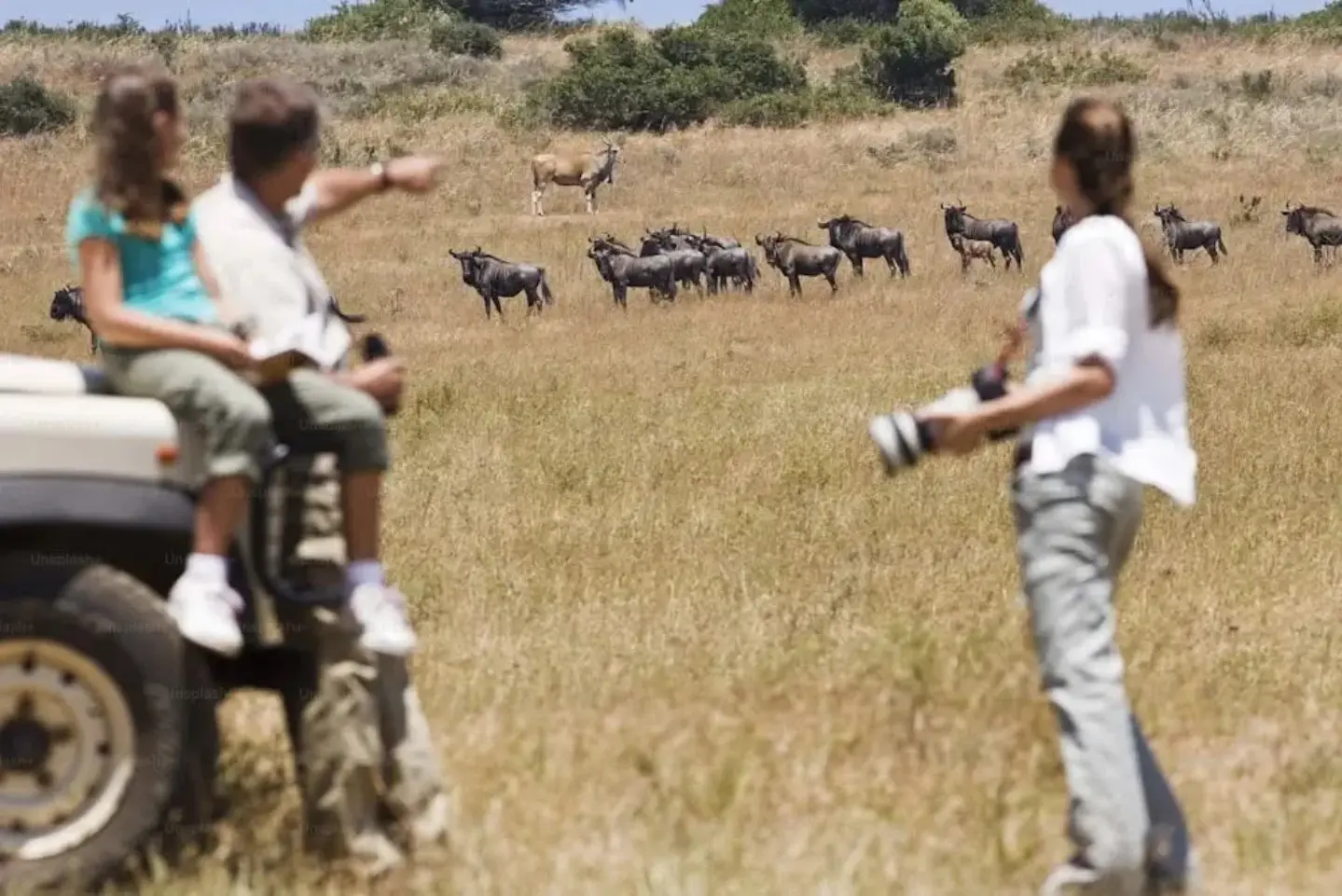
6. Bring patience and binoculars. The Serengeti is vast. Great sightings often require stillness and waiting. The reward for patience is always worth it.
7. Combine with Ngorongoro or Zanzibar. A Serengeti migration safari pairs beautifully with a day in the Ngorongoro Crater (Africa’s densest wildlife concentration) before or after, or with 4–5 nights relaxing on Zanzibar’s white-sand beaches.
Frequently Asked Questions
When is the best time to see the Serengeti migration river crossings?
The most dramatic Serengeti river crossings occur between July and October at the Mara River in the northern Serengeti. July and August see the highest crossing frequency, while September and October offer similar action with fewer visitors and often clearer air for photography.
Is the Serengeti migration year-round?
Yes — the Serengeti migration is a continuous, year-round movement. The herds are always in the Serengeti ecosystem, moving clockwise through different regions depending on the season. The “best” time depends entirely on which spectacle you most want to witness: calving, river crossings, or the return journey.
How many wildebeest are in the great wildebeest migration?
The great wildebeest migration includes approximately 1.5 million wildebeest, along with 200,000 zebra and 300,000 Thomson’s gazelle — making it the largest overland animal movement on the planet.
Can I witness the Serengeti migration without going to Kenya?
Absolutely. The majority of the Serengeti migration takes place in Tanzania. The northern Serengeti’s Kogatende and Lamai areas offer the same Mara River crossings you see in the Masai Mara — with fewer vehicles and in some cases better access. Mujuni African Adventures specialises in Tanzania-only itineraries.
How much does a Serengeti migration safari cost?
A quality Serengeti migration safari typically starts around $400–$600 per person per day for mid-range options, and $700–$1,500+ per person per day for luxury mobile tented camps. Prices include accommodation, meals, guiding, park fees, and game drives. Contact us for a personalised quote based on your dates and travel style.
Your Serengeti Migration Adventure Starts With One Conversation
There is no better way to plan your Serengeti migration safari than talking to someone who has lived it. At Mujuni African Adventures, our guides were born and raised in Tanzania — from the sweeping plains of the Serengeti to the coral reefs of Zanzibar. We don’t just know this country. We are this country.
Book My Free Consultation
No pushy sales. No hidden fees. Just expert advice from Tanzania’s local guides.
🌎
Book Your Free Safari Consultation
Tell us about your dream safari — one of our Tanzanian guides will be in touch within 24 hours.
Choose a preferred date & time slot
East Africa Time (EAT) is UTC+3. We will confirm your slot and send the meeting link to your email within a few hours.
Or reach us directly on WhatsApp: +255 672 450 072
✓
Enquiry Received — Thank You!
One of our local Tanzanian guides will review your details and get back to you within 24 hours.
Online Meeting Requested
We will confirm your slot and send the video call link directly to your email.
Need a faster response? Message us now on
+255 672 450 072